SYMBOLS & STORIES · TatTryOn editorial
Butterfly Tattoo Meaning
A butterfly tattoo can represent personal change, freedom, or a new chapter. It can also be chosen simply for its wings. Historical associations vary, so a butterfly does not reveal a wearer’s identity or life story by itself.
Explore personal interpretations, cultural context, color, style, and placement before choosing a design. Try the Quiet wings study on a photo, free and without signing in.
Help me make a butterfly tattoo personal →
What a Butterfly Tattoo Means
Transformation is a useful personal starting point for a butterfly design, but it becomes more meaningful when you can say what changed. You might be celebrating greater independence, a creative direction, or a new place in life. The tattoo does not need to announce the whole story. A private association can be as deliberate as a design with dates or lettering.
Consider whether the wings should be open, partly folded, or shown in motion. Open wings give a balanced frontal shape; an angled view creates a different sense of movement. Neither pose comes with a guaranteed meaning. Instead, use the pose to make your own interpretation visible. Our sample is a symmetrical wing study intended to help you compare the outline on a photograph.
- Transformation: a personal before-and-after or a new direction.
- Freedom: a reminder of greater independence.
- Resilience: your own story of continuing through change.
- Growth: an unfinished process you want to keep in view.
Symbolism Across Cultures
The Metropolitan Museum of Art’s record for a seventeenth-century Chinese jade butterfly describes associations with joy, weddings, and longevity. This is a useful reminder that the modern personal-change reading is not the only possible context. The museum’s interpretation concerns a particular art tradition and object; it is not a universal rule for anyone who wears a butterfly.
Avoid treating every butterfly reference as culturally interchangeable. A historical ornament, an illustration of a real species, and a contemporary abstract wing design have different origins. If a particular object inspires you, note where it comes from and ask for an original interpretation rather than copying an image without context. If nature is the main connection, a clearly identified species may be a more relevant research starting point.
Cultural reference: The Met: Butterfly, seventeenth-century Chinese jade. This source describes a historical object; the design suggestions on this page are editorial interpretations.
How Color Changes the Design
A black butterfly can simply be a preference for a restrained palette. Blue may connect the design to a favorite color or a particular butterfly reference. A multicolored treatment can emphasize the wing pattern, but none of these options provides a reliable code for grief, freedom, or personality. Those associations should be described as the wearer’s intentions unless there is a specific documented context.
Separate the outline decision from the palette decision. If you like the drawing in a single tone, ask whether color should highlight its shape or become the main feature. Do not rely on a bright screen rendering to predict ink on skin. Our linked sample is monochrome, so it helps with silhouette and placement rather than testing any proposed blue or multicolored version.
Which Placement Fits Your Idea
The butterfly’s width matters because both wings need to remain visible for a symmetrical composition to read clearly. On a narrow forearm view, compare a smaller upright version with a slight angle. On a shoulder or back photograph, check the space beyond the wing tips rather than filling the whole visible area. The edge of the photo is not a meaningful anatomical boundary.
Decide which viewpoint matters most to you: looking down at your own tattoo, seeing it in a mirror, or showing it with the body relaxed. These views may favor different angles. A single photo is only one comparison. Take another personal reference if the position changes substantially with posture, and let your artist evaluate the placement directly before settling on the final stencil.
Compare existing placement galleries: wrist examples · forearm examples · hand examples · ankle examples. For a broader comparison, read the tattoo placement guide.
Styles and What They Emphasize
Fine-line wings can feel light because open space remains part of the drawing. Blackwork emphasizes a stronger outline and dark pattern. A realistic species study needs anatomical reference and a different level of detail from the abstract sample here. Ask yourself whether recognition of a specific species matters, or whether the butterfly shape alone carries the idea you want.
If you are combining a butterfly with a flower, decide which element should lead. Two equally detailed subjects can become difficult to read when reduced in size. Try separate sketches with the butterfly dominant and the flower dominant instead of shrinking a complex composition until it fits the screen. A larger digital preview is not a guarantee that all the details can be transferred into a small tattoo.
Explore different drawing approaches: Fine line tattoo designs · Minimalist tattoo designs · Blackwork tattoo designs · Geometric tattoo designs · Watercolor tattoo designs. These galleries contain other subjects too; they are style references, not additional butterfly variants.
Butterfly Tattoo Design Studies
The same Quiet wings design appears on three adult AI model photographs below. Each is a Classic flat composite rather than a photograph of real ink. Use the previews to compare the space around the wing tips, the angle of the central body, and the balance of the shape against the visible body area. They illustrate placement choices, not three different meanings.
Open the version closest to your idea, then upload a personal photo if you want to evaluate it on yourself. Save an upright version and an angled version before deciding. When you bring the references to an artist, explain which outline and wing proportions you want to preserve. Treat any detailed pattern inside the wings as something the artist can adapt to the final size.
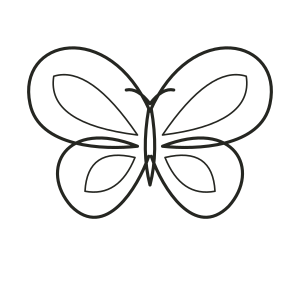
Quiet wings
Original vector design study. One drawing, three placement comparisons. Visual reference, not a finished stencil.
Try this butterfly →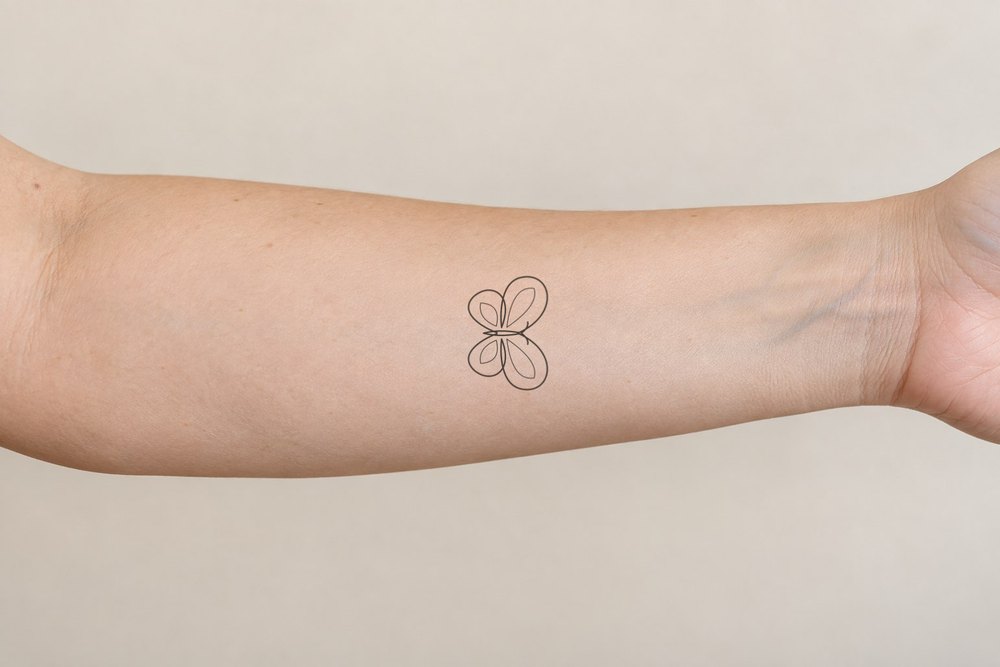
Forearm
Classic composite · adult AI model · not a real tattoo
Try this placement →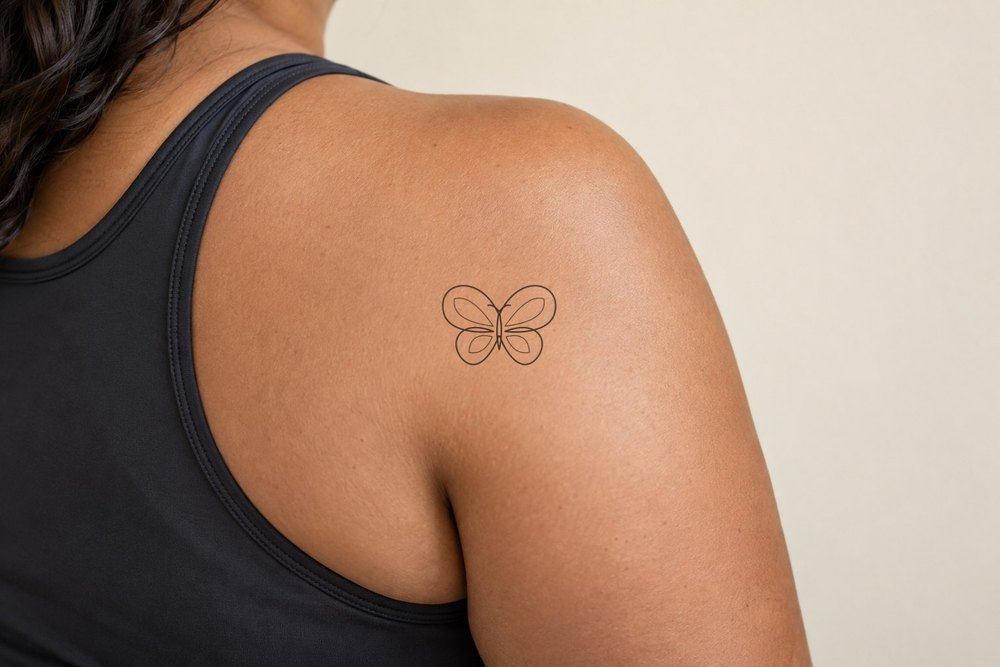
Shoulder
Classic composite · adult AI model · not a real tattoo
Try this placement →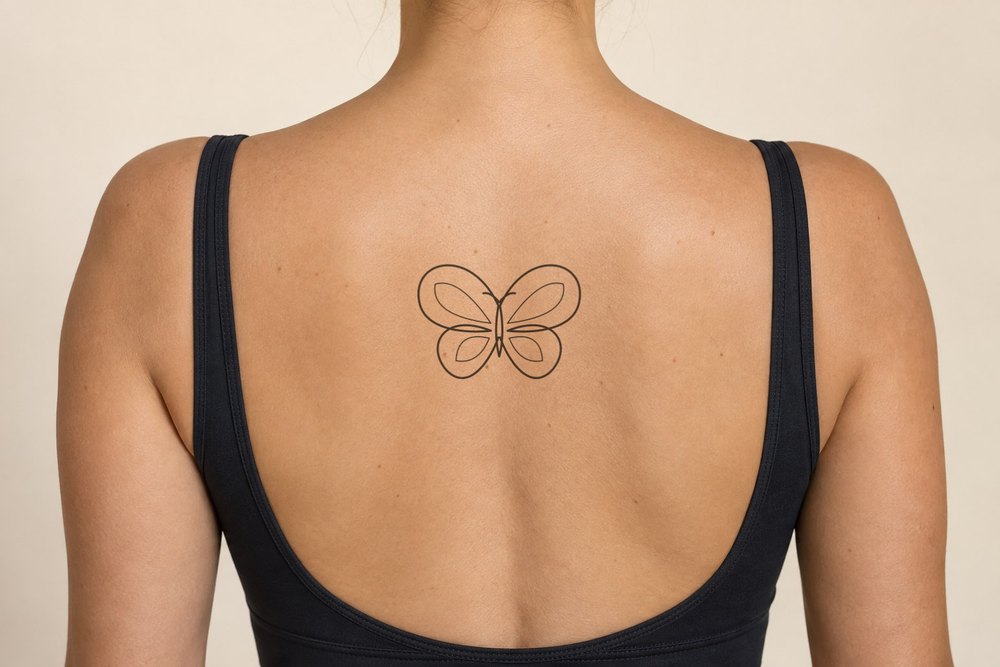
Back
Classic composite · adult AI model · not a real tattoo
Try this placement →Butterfly Tattoo FAQ
What does a butterfly tattoo mean on a woman or a man?
Gender does not assign the tattoo a fixed meaning. Change, freedom, a personal memory, or an interest in nature can matter to anyone. Choose the outline and placement you enjoy rather than assuming a particular style belongs to one gender. The wearer’s own explanation is the best guide.
Is there a negative meaning to a butterfly tattoo?
There is no single negative meaning that applies to every butterfly tattoo. A personal association with loss can coexist with joy or a new beginning. The image alone cannot reveal someone’s beliefs or experiences, and choosing the motif simply because you like it is also a valid reason.
What can a butterfly tattoo mean in a mental health context?
A wearer may choose it as a personal reminder of change, hope, or a difficult chapter they have moved through. That interpretation belongs to them. A tattoo cannot tell you someone’s mental health history, and nobody needs to disclose a private experience to justify a design.
Where can I place a butterfly tattoo, and what does it mean on the wrist?
Wrist placement can make the design easy for you to see, but it does not give it a separate universal meaning. Compare the wrist, forearm, hand, ankle, shoulder, or back using an appropriate photo. Confirm the actual size and final position with your artist; a screen preview has no fixed physical scale.
Try it on your skin
Open the free Classic tattoo simulator, choose a body preset or upload your own photo, then use Edit placement to adjust size, position, and angle. Download two versions to compare. Sign-in is not required, and Classic photo processing stays in your browser.
A digital overlay does not predict healed ink, skin movement, or how fine details will age. It does not recolor this design or change its line weight. Keep the original drawing alongside the preview so your artist can adapt it and confirm physical dimensions.
Try this butterfly on your photoFor another subject, browse tattoo designs or explore the AI tattoo generator, which has separate sign-in and usage requirements.