SYMBOLS & STORIES · TatTryOn editorial
Snake Tattoo Meaning
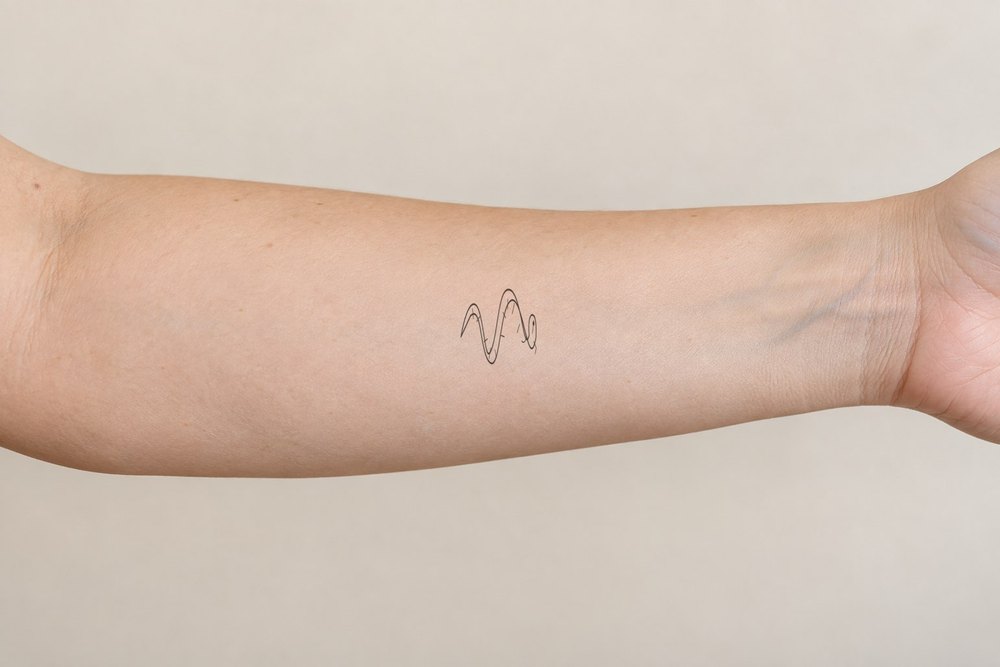
Snake tattoo meaning: renewal or a boundary
Help me make this meaning personal →
Shedding skin: a personal image of rebirth
A snake can give an abstract idea a strong visual direction. You might use a shedding-skin association to describe leaving an old habit behind, or choose a watchful pose to express a personal boundary. These are possible interpretations for your own design brief. They do not allow anyone to diagnose a stranger’s personality from a tattoo or decide whether the wearer is trustworthy.
Before picking a pose, choose one sentence you want the drawing to support. “I can change” points toward a different mood from “keep your distance.” A relaxed curve can feel quieter than an open mouth and visible fangs. Both can belong to the same animal motif while creating very different first impressions. The posture deserves as much attention as the symbol name.
Danger and healing: different cultural and biblical images
The serpent in Genesis 3 is part of the account of temptation in Eden. Numbers 21 tells a different story: after the people are bitten, Moses makes a bronze serpent, and those who look at it live. These passages offer distinct roles for a snake image within the same collection of texts. It is inaccurate to label every biblical serpent as either only harmful or only healing.
The references below identify the passages in the USCCB edition. Their narratives do not establish that a modern tattoo has a protective or medical effect. A spiritual design should name the passage or tradition it draws from. If you want an ordinary animal rather than a religious symbol, ask for an original snake study and avoid accidentally borrowing a specific emblem.
The contrast between danger and care can also be a personal design idea: a watchful animal, a boundary, or a reminder of change. Keep that personal interpretation separate from a claim about an entire culture. An unfamiliar symbol beside the snake may change the reference more than the species or color does.
Context sources: USCCB: Genesis 3 · USCCB: Numbers 21. These describe particular sources and contexts, not universal tattoo meanings.
Black snakes, red accents, and natural colors
Our serpent concept uses black shapes to make the curve legible. That choice is graphic, not a claim about morality or temperament. A red accent can be an aesthetic emphasis, but it does not prove anger, danger, or passion. Naturalistic colors may help distinguish a species; if the species matters to your story, confirm its anatomy with a reliable animal reference rather than using color alone.
Think about where the eye should land. A colored head on a dark body creates a different focal point from a single consistent tone. If you want minimal detail, compare a silhouette with an outline instead of adding several competing accents. These choices belong in a design brief. They are not predictions of how a particular pigment will look after healing on your body.
Should the snake head point up or down?
Neither direction has a universal tattoo meaning. An upward head might support your personal story of reaching forward; a downward curve might follow the anatomy more naturally or lead toward another part of a composition. Those are choices, not a secret code that changes the snake from good to bad. Decide whether the tattoo should read best to you, to a viewer in front of you, or in a relaxed standing pose.
On the forearm, compare the head toward the elbow with the head toward the wrist. On the hand, check how the full curve relates to the knuckles rather than looking only at the face. Rotate the sample in the preview, save both versions, and let your artist check the actual body area. A flat overlay cannot plan a continuous wrap around a limb.
Placement: follow the curve without forcing a wrap
The long curve of a snake can follow a forearm, a shoulder line, or a larger back composition. Begin by identifying the head and the direction it faces. A design that looks balanced in a square reference may feel crowded when the head approaches the edge of a narrow photograph. Check the tail too: it should feel intentional, not like a leftover line squeezed into a gap.
A real wrapping design needs an artist to consider more than one view of the body. Our flat preview cannot show the hidden side of an arm or continuously wrap a snake around it. Use the visible surface to compare an initial placement, then bring multiple reference angles to the appointment. Avoid using a stretched digital overlay as evidence that the design will fit all the way around.
Compare placement references: wrist tattoo examples · forearm tattoo examples · hand tattoo examples · ankle tattoo examples. See the tattoo placement guide for more ways to compare.
Fine line, blackwork, or a detailed snake
Blackwork puts emphasis on contour and the relationship between dark ink and open space. Fine line can emphasize movement with fewer filled areas. A detailed animal study might include scales, a specific head shape, and a more complex pose. Decide which of those details actually carries your intended story before asking for a small version that tries to include everything.
Pairings also change the reading. A snake with a flower may create contrast between soft petals and a winding body; a blade introduces a much more confrontational object. These combinations do not have fixed meanings, and the page’s single-serpent sample does not demonstrate them. Ask for separate sketches if you are deciding between a quiet animal motif and a narrative scene.
Browse style references: Fine line tattoo designs · Minimalist tattoo designs · Blackwork tattoo designs · Geometric tattoo designs · Watercolor tattoo designs. These galleries include other subjects and do not change a symbol’s meaning.
Snake tattoo designs: compare nine new variations
Compare nine AI-generated snake design references alongside our existing vector study. These are distinct drawings with different outlines, colors, or compositions. Each new design has its own Try on link. The separate body-photo examples below reuse the original study to illustrate placement, so they do not count as additional designs.
Compare the same blackwork serpent on the three model photographs below. The previews are Classic composites using adult AI model images, not real tattoo results. Look first at the head, then follow the full curve to the tail. Does the movement work with the visible body area, and is there enough empty space around the ends to understand the shape?
Click a preview to keep the selected drawing and placement when entering the simulator. Make one alternative with a slightly different angle and save both versions. On your own photograph, compare the snake at normal viewing size as well as close up. Your artist can then decide how to redraw its contour and detail for the physical location you choose.
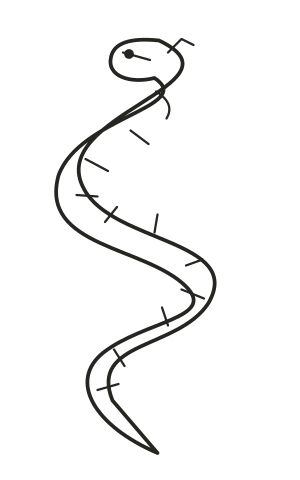
Serpent
Original vector study · visual reference, not a finished stencil
Try on →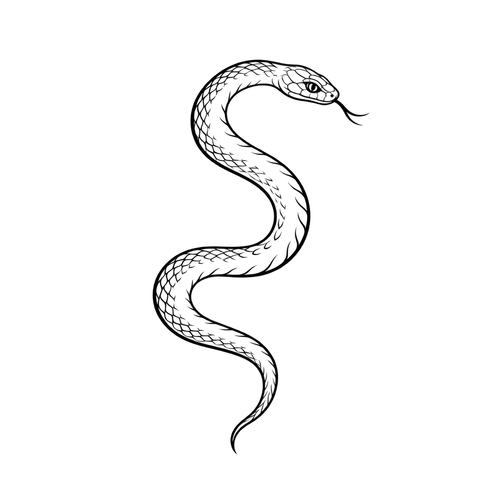
S-curve snake
The loose S curve gives the head and tail separate spaces in the composition. Follow the line through both bends before choosing an angle. This version lets you compare a long, light silhouette without a tightly packed coil. Start with a clear photo that includes nearby body landmarks, then save two versions with different sizes for comparison. Use Try on to make a personal preview; your tattoo artist should confirm the final line spacing and physical dimensions.
AI-generated design reference · not a finished stencil
Try on →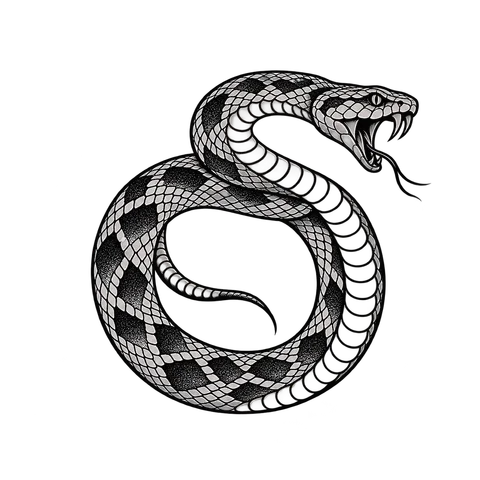
Open coil
The circular coil creates a compact center with the head extending beyond it. Leave room in front of the face, and compare the opening inside the loop with the surrounding skin. A centered placement may feel different from an offset one. Use a relaxed body photo and change one placement choice at a time so the comparison stays useful. Use Try on to make a personal preview; your tattoo artist should confirm the final line spacing and physical dimensions.
AI-generated design reference · not a finished stencil
Try on →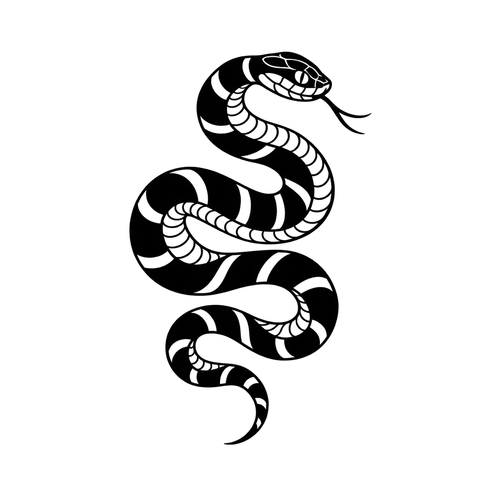
Banded snake
Alternating dark and open bands make the body rhythm more prominent than individual scales. Check where the bands meet at each bend. Compare against the fine-line version to decide whether a graphic pattern or softer contour suits your idea. Choose a photo facing the intended area, then compare the design from a normal viewing distance. Use Try on to make a personal preview; your tattoo artist should confirm the final line spacing and physical dimensions.
AI-generated design reference · not a finished stencil
Try on →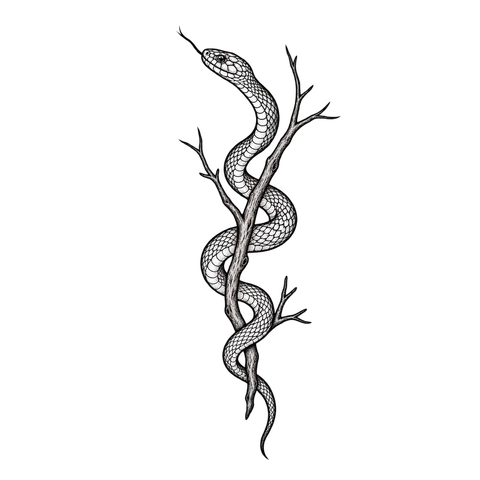
Branch snake
The twig gives the snake a second vertical line to wind around. Trace the crossings carefully when choosing a preview size, keeping the branches distinguishable from the body. The full composition extends farther than the snake alone. Start with a clear photo that includes nearby body landmarks, then save two versions with different sizes for comparison. Use Try on to make a personal preview; your tattoo artist should confirm the final line spacing and physical dimensions.
AI-generated design reference · not a finished stencil
Try on →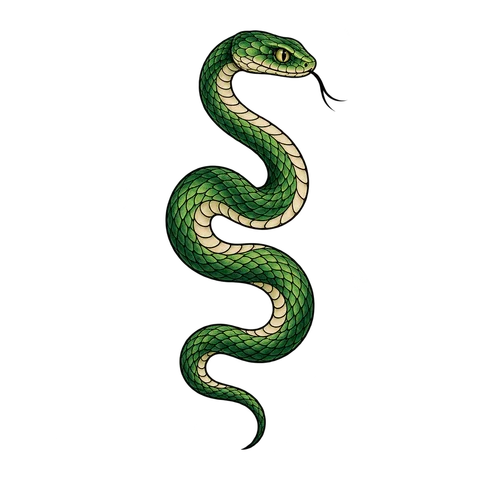
Emerald snake
The green body and pale underside make the turns easy to follow. Compare the color boundary through each bend rather than judging only the head. Keep the pose upright first, then test a small rotation on the same photograph. Use a relaxed body photo and change one placement choice at a time so the comparison stays useful. Use Try on to make a personal preview; your tattoo artist should confirm the final line spacing and physical dimensions.
AI-generated design reference · not a finished stencil
Try on →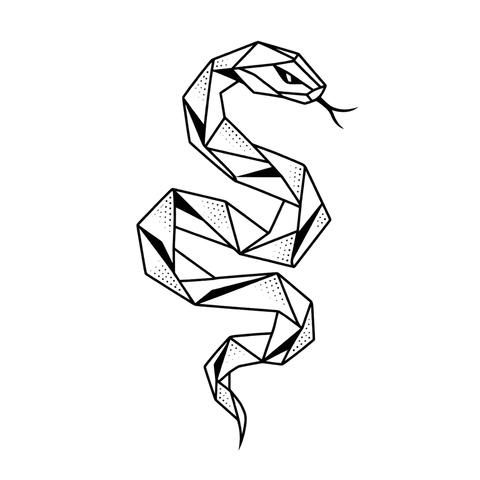
Angular snake
Faceted bends replace the smooth body with an angular route. The edges can make alignment more noticeable, particularly near a wrist or ankle. Start large enough to see the internal panels, then compare a simpler smaller silhouette. Choose a photo facing the intended area, then compare the design from a normal viewing distance. Use Try on to make a personal preview; your tattoo artist should confirm the final line spacing and physical dimensions.
AI-generated design reference · not a finished stencil
Try on →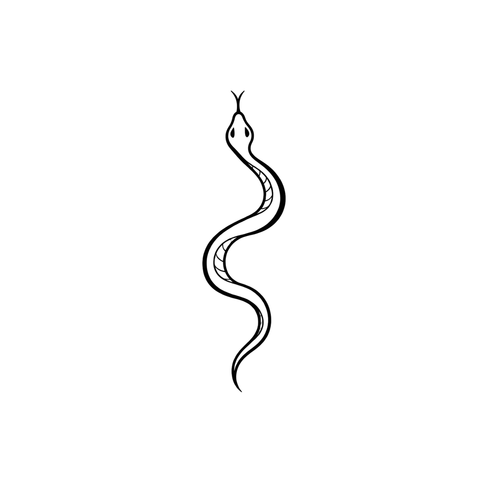
Simple snake
This spare outline uses only a few turns and minimal facial detail. Check that the narrow spaces between the two sides remain visible. Its restraint makes position and angle more prominent than surface texture or scale patterns. Start with a clear photo that includes nearby body landmarks, then save two versions with different sizes for comparison. Use Try on to make a personal preview; your tattoo artist should confirm the final line spacing and physical dimensions.
AI-generated design reference · not a finished stencil
Try on →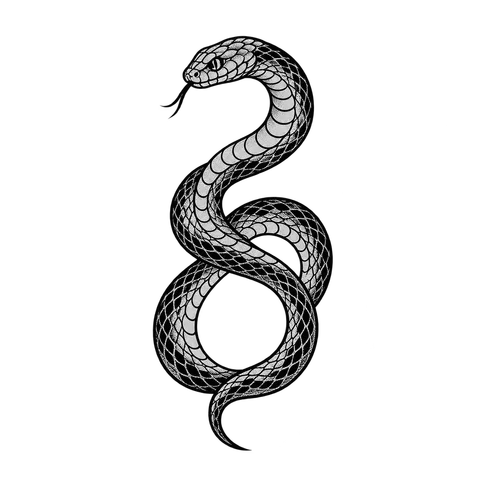
Looping snake
The figure-eight arrangement introduces a crossing and a clear lower loop. Follow the body from the head through the overlap to the tail. Compare it vertically and slightly angled, leaving the central opening visible in both versions. Use a relaxed body photo and change one placement choice at a time so the comparison stays useful. Use Try on to make a personal preview; your tattoo artist should confirm the final line spacing and physical dimensions.
AI-generated design reference · not a finished stencil
Try on →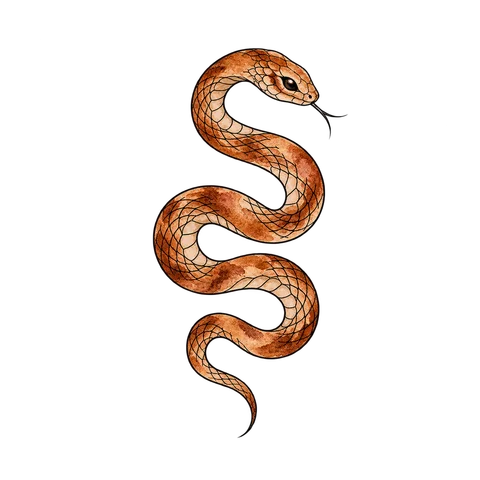
Copper snake
The copper wash follows the snake’s length, with a dark contour keeping the body readable. Look at the variation in pigment as an illustration texture. Compare the warm color against your own photograph before deciding on the composition. Choose a photo facing the intended area, then compare the design from a normal viewing distance. Use Try on to make a personal preview; your tattoo artist should confirm the final line spacing and physical dimensions.
AI-generated design reference · not a finished stencil
Try on →Forearm
Classic composite · adult AI model · not a real tattoo
Try this placement →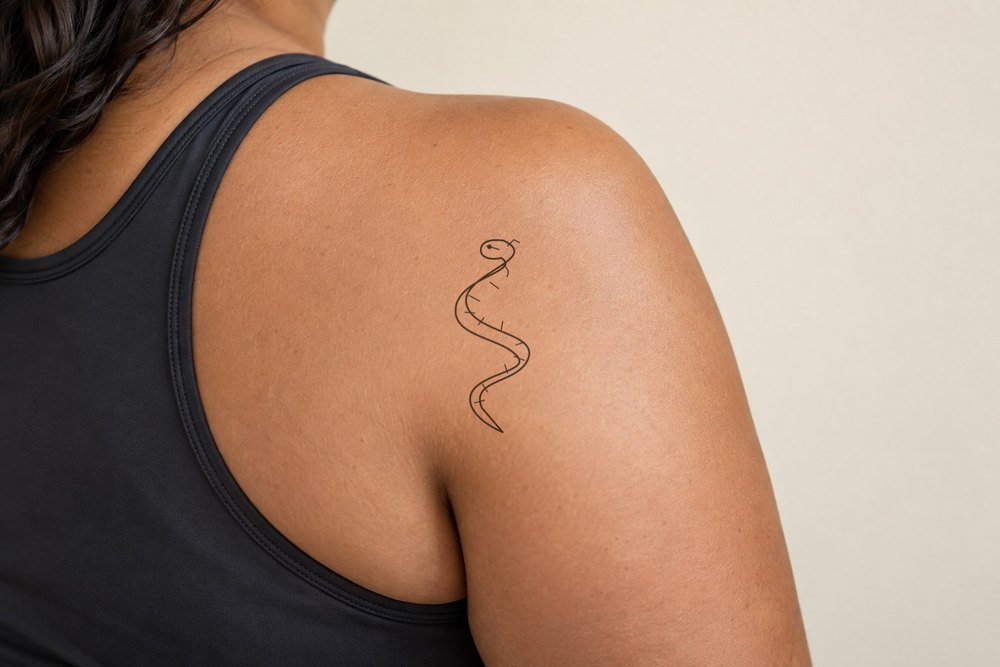
Shoulder
Classic composite · adult AI model · not a real tattoo
Try this placement →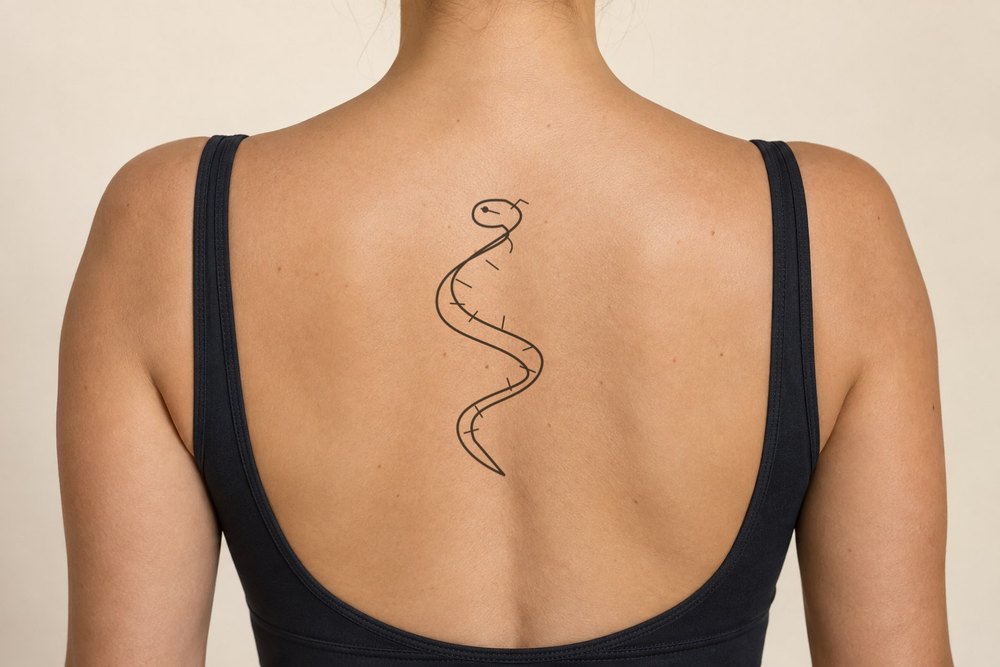
Back
Classic composite · adult AI model · not a real tattoo
Try this placement →Try it on your skin
Preview a design on your photo without leaving this page. Choose an adult body preset or upload a photo, then adjust position, size, and angle. Classic is free and requires no sign-in; photo processing stays in your browser. Download a reference before replacing your current draft.
This is a flat visual comparison, not a prediction of healed ink, skin movement, or physical dimensions. Bring the original drawing and preview to your tattoo artist.
Try on your photo →Prefer a full workspace? Open the tattoo simulator.
Snake Tattoo FAQ
What do snake tattoos symbolize?
A snake can express a personal idea of renewal, vigilance, a boundary, or fascination with the animal. Some traditions give specific serpent figures religious roles. Identify that context before assigning a meaning; a tattoo alone cannot tell you whether its wearer is dangerous or protective.
Should a snake tattoo go up or down?
There is no universal rule. Compare both directions against the body’s visible landmarks and decide which viewpoint matters to you. An upward head does not automatically mean growth, and a downward head does not automatically mean misfortune. Explain your intended reading to the artist.
What is the spiritual meaning of a snake tattoo?
It depends on the reference. Genesis and Numbers use serpents in different narratives, while other traditions have their own figures. Name the story you are using instead of combining unrelated symbols into a supposedly universal spiritual meaning. The tattoo itself promises no healing or protection.
Does a snake tattoo mean something different for a woman or for guys?
No fixed definition follows from gender. A quiet line drawing, a bold silhouette, or a detailed animal can suit anyone. Choose the pose and placement you enjoy and avoid treating size, darkness, or aggression as a requirement for a particular person.