SYMBOLS & STORIES · TatTryOn editorial
Phoenix Tattoo Meaning
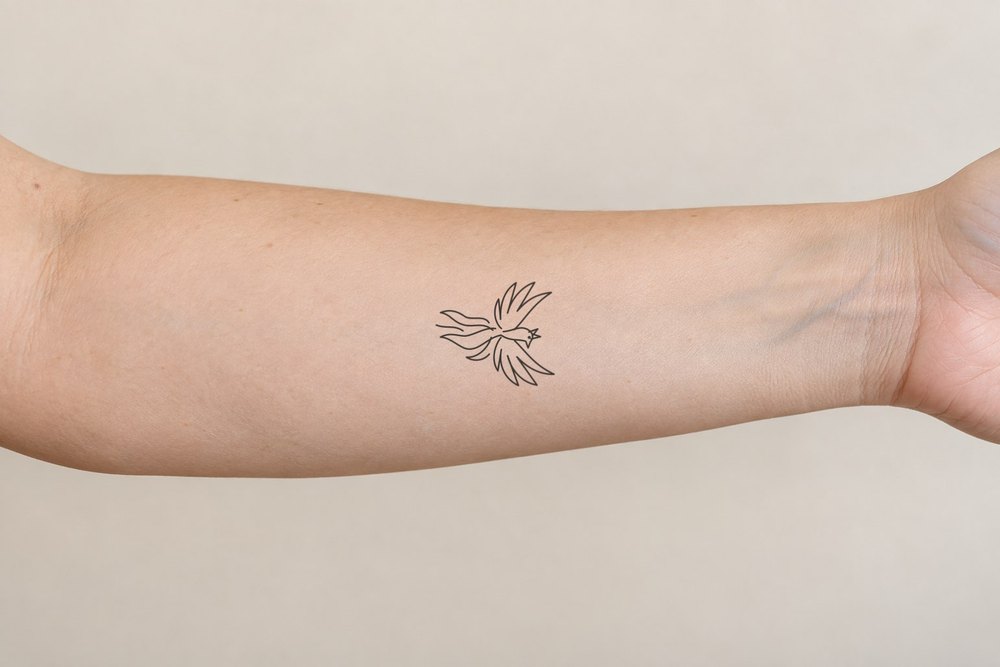
Phoenix tattoo meaning: define your new beginning
Help me make this meaning personal →
Rising from fire: rebirth and personal strength
If you want a phoenix to represent starting again, decide which part of that idea matters most: survival, the choice to change, or the life you are building afterward. The image can hold that intention without making a public claim about the details. You are free to choose a bird because you like its movement as well; a tattoo does not need an account of hardship to be meaningful.
A rising pose can suggest forward motion in your own composition, while folded wings might feel more contained. Fire is an optional storytelling device, not a requirement for every design. Before adding flames, ask whether they clarify your idea or merely fill space around the bird. A short design brief can keep a dramatic motif from becoming a collection of unrelated details.
Greek phoenix, Egyptian Bennu, and Chinese fenghuang
The familiar fire-and-ashes phoenix is part of a changing classical and later literary tradition, not a single account repeated unchanged everywhere. The 1911 Encyclopaedia Britannica entry distinguishes older reports from the later familiar ashes narrative. Use it as a historical reference for the development of the story, not as evidence that every ancient Greek version described the same fiery rebirth.
Egypt’s Bennu is a different named figure. NASA’s explanation of the asteroid name links the Egyptian deity with the sun, creation, and rebirth. That short naming explanation does not establish that Bennu followed the same fire story as a later phoenix. If you want Egyptian imagery, research Bennu specifically rather than drawing a generic flame bird and calling it historically Egyptian.
Chinese fenghuang imagery belongs to another cultural history. The Met’s essay discusses dragon and phoenix motifs within an imperial visual language. A Chinese reference should not be explained solely as a bird burning and returning from ashes. Keep its source and historical setting alongside the design. Similar English translations do not make these three birds interchangeable.
Context sources: Historical reference: 1911 Britannica, Phoenix · NASA: the Egyptian Bennu and the asteroid name · The Met: motifs transmitted across Asia. These describe particular sources and contexts, not universal tattoo meanings.
Black ink, warm colors, and the role of fire
Black linework draws attention to the wings and long tail. Warm colors can be your way of adding a fire theme, while a cooler palette may connect with a different personal mood. These are creative choices rather than a standardized system of tattoo meanings. Red ink does not establish a particular type of resilience, and a monochrome bird does not lose your intended new-beginning story.
Decide whether the bird or the flames should dominate before choosing a palette. If both are equally complex, the outline may become hard to follow in a small reference. Try a clear bird silhouette first and keep a second sketch for added fire. The sample previews below contain the black design only; they do not demonstrate how any colored version would heal or appear on your skin.
Versions for men and women: choose proportions, not labels
There is no separate male or female phoenix meaning. A broad wing span, a long tail, a small open outline, or a bright palette can be chosen by anyone. Instead of asking for a masculine or feminine phoenix without further explanation, describe the features you actually like: heavier lines, more empty space, a compact shape, or a longer flowing movement.
Body proportions and desired visibility give an artist more useful information than gender stereotypes. Compare the same design on your own photo before assuming a sample on another person is the right size. Our adult AI model images are composition references; they do not prescribe who should choose the design.
Placement: wings need width, tails need length
A phoenix design often asks for space in two directions. The wings establish width while the tail creates length. A forearm preview may require a more compact wing arrangement than a back composition. On the shoulder, compare the angle carefully so the bird’s body does not look accidental relative to the arm. These are drawing and placement decisions, not symbolic rules for different body areas.
Look at the whole outline before zooming into feather details. The head should remain distinct from the wing, and the tail should have a clear ending. A flat photograph cannot demonstrate how broad wings would wrap around the shoulder. Use it to choose an initial direction, then let your artist work out the actual placement from multiple views of the body.
Compare placement references: wrist tattoo examples · forearm tattoo examples · hand tattoo examples · ankle tattoo examples. See the tattoo placement guide for more ways to compare.
A simple bird or a detailed narrative
A fine-line phoenix can communicate through a few clear feather shapes, while blackwork can emphasize a dramatic silhouette. A detailed realism-inspired piece needs a new drawing with deliberate anatomy and shading. There is no need to demand every individual feather in a tiny design. Decide which features must remain recognizable at the size you are considering and allow the rest to be simplified.
Dates, words, and other objects can make the concept more personal, but each addition introduces another visual priority. Start by comparing the bird alone with a version containing just one meaningful addition. If lettering is essential, keep the exact text in your brief and review it separately. An automatic interpretation tool cannot verify a translation or establish the meaning of an unfamiliar script.
Browse style references: Fine line tattoo designs · Minimalist tattoo designs · Blackwork tattoo designs · Geometric tattoo designs · Watercolor tattoo designs. These galleries include other subjects and do not change a symbol’s meaning.
Phoenix tattoo designs: compare nine new variations
Compare nine AI-generated phoenix design references alongside our existing vector study. These are distinct drawings with different outlines, colors, or compositions. Each new design has its own Try on link. The separate body-photo examples below reuse the original study to illustrate placement, so they do not count as additional designs.
The three Classic previews use the same stylized phoenix on adult AI model photographs. Their purpose is to compare composition: the direction of the head, the room around the wings, and the end of the tail. They are flat overlays, not evidence of tattoo execution or healed results. Apparent proportions in a photograph should not be used as a physical measurement.
Open a sample in the simulator and adjust one variable at a time. Compare the angle first, then the size, and download a version you want to keep before moving on. If the composition becomes cramped, try another body area rather than forcing the bird into a narrow shape. Bring both the original motif and your selected placement to the artist so they can see what you want to preserve.
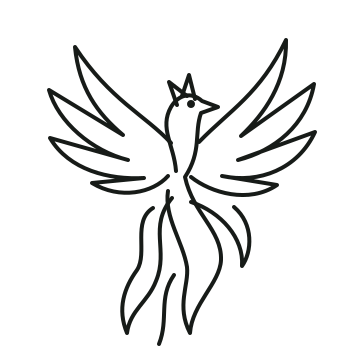
Rising phoenix
Original vector study · visual reference, not a finished stencil
Try on →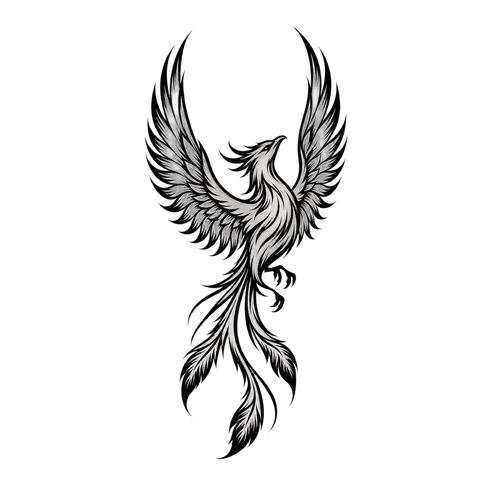
Ascending phoenix
The raised wings draw attention upward, while the trailing feathers extend the lower edge. Compare the height of the whole bird rather than sizing only the torso. Leave clear space beyond the wing tips and the lowest tail feather. Start with a clear photo that includes nearby body landmarks, then save two versions with different sizes for comparison. Use Try on to make a personal preview; your tattoo artist should confirm the final line spacing and physical dimensions.
AI-generated design reference · not a finished stencil
Try on →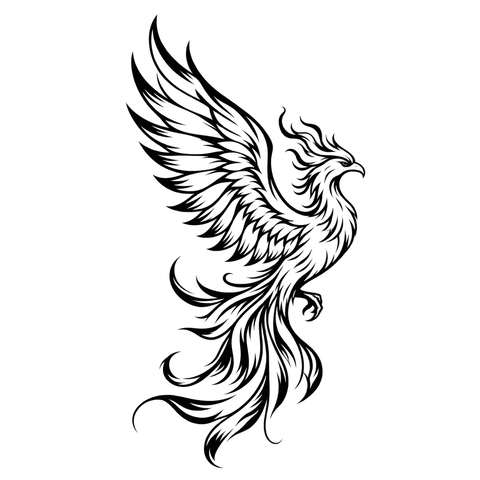
Sweeping phoenix
The side view makes one sweeping wing the dominant shape. Compare the direction of its curve with the length of your forearm or another chosen area. The tail supplies a secondary movement that needs room below the bird. Use a relaxed body photo and change one placement choice at a time so the comparison stays useful. Use Try on to make a personal preview; your tattoo artist should confirm the final line spacing and physical dimensions.
AI-generated design reference · not a finished stencil
Try on →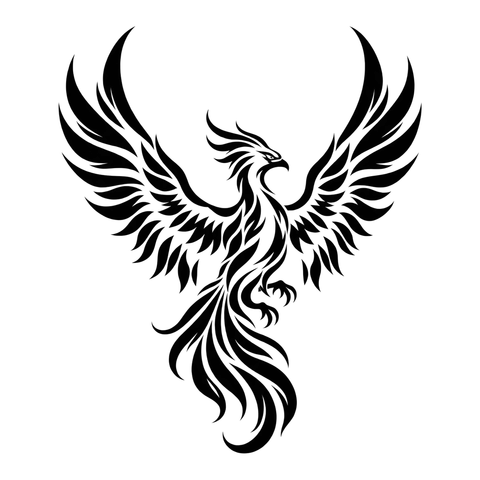
Blackwork phoenix
Open cuts separate the black feather groups and keep the body from becoming a solid block. View the design at ordinary screen distance to judge the silhouette. Compare larger and smaller versions while watching those internal gaps. Choose a photo facing the intended area, then compare the design from a normal viewing distance. Use Try on to make a personal preview; your tattoo artist should confirm the final line spacing and physical dimensions.
AI-generated design reference · not a finished stencil
Try on →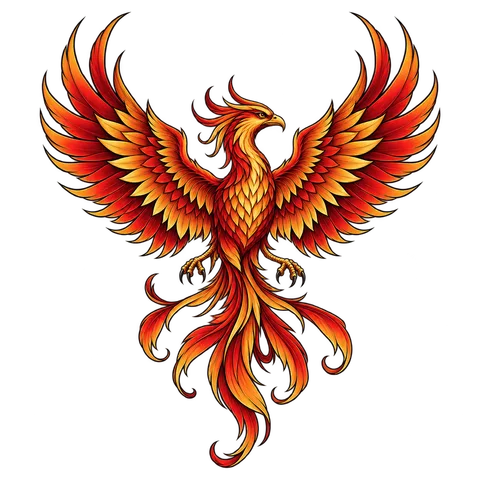
Ember phoenix
Red and amber feathers give this bird a bright central focus. The spread wings make the composition wider than the rising version, so compare the complete span against your photograph. Color and size can be evaluated in separate previews. Start with a clear photo that includes nearby body landmarks, then save two versions with different sizes for comparison. Use Try on to make a personal preview; your tattoo artist should confirm the final line spacing and physical dimensions.
AI-generated design reference · not a finished stencil
Try on →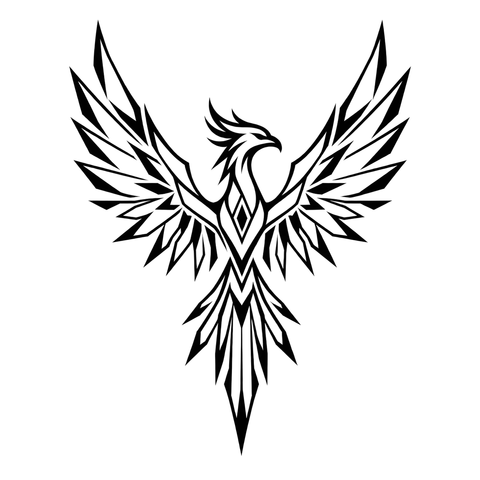
Faceted phoenix
The pointed feather panels make this phoenix more angular. Check the balance of the two wings and the vertical line beneath the body. A slight tilt can look intentional or accidental depending on the surrounding body landmarks. Use a relaxed body photo and change one placement choice at a time so the comparison stays useful. Use Try on to make a personal preview; your tattoo artist should confirm the final line spacing and physical dimensions.
AI-generated design reference · not a finished stencil
Try on →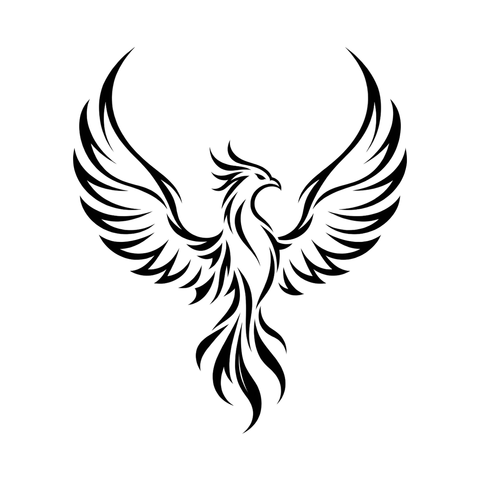
Simple phoenix
The simplified curves reduce the feather detail and emphasize the upward gesture. Compare the silhouette first, especially the open spaces around the neck and tail. This is a useful alternative when a detailed bird feels visually crowded. Choose a photo facing the intended area, then compare the design from a normal viewing distance. Use Try on to make a personal preview; your tattoo artist should confirm the final line spacing and physical dimensions.
AI-generated design reference · not a finished stencil
Try on →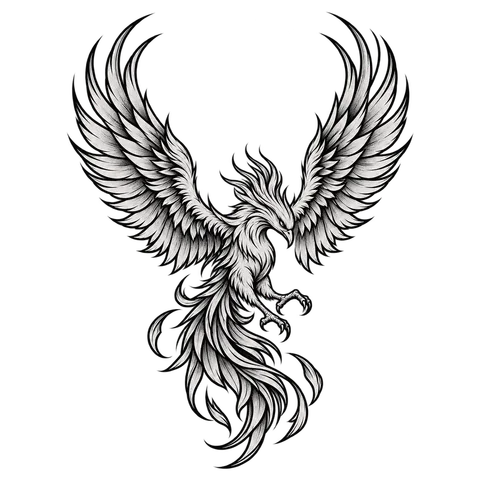
Descending phoenix
The downward-facing head changes the movement even though the wings remain raised. Look at the claws and tail as well as the face when choosing orientation. Compare the entire figure against a version with an upward-looking head. Start with a clear photo that includes nearby body landmarks, then save two versions with different sizes for comparison. Use Try on to make a personal preview; your tattoo artist should confirm the final line spacing and physical dimensions.
AI-generated design reference · not a finished stencil
Try on →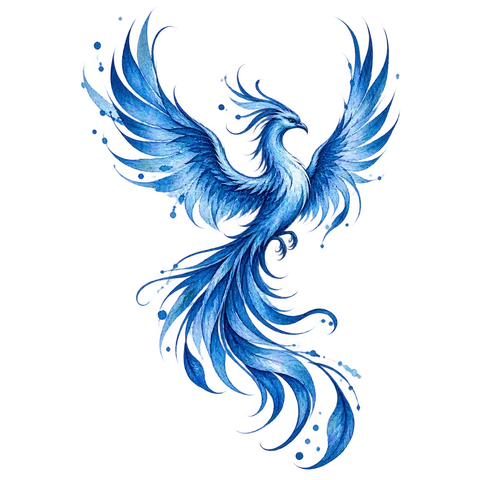
Blue phoenix
The blue wash introduces soft pigment edges around the long tail. Include those accents when judging the design’s footprint. Compare the color treatment on a quiet background, then use your own photo to decide whether the flow works. Use a relaxed body photo and change one placement choice at a time so the comparison stays useful. Use Try on to make a personal preview; your tattoo artist should confirm the final line spacing and physical dimensions.
AI-generated design reference · not a finished stencil
Try on →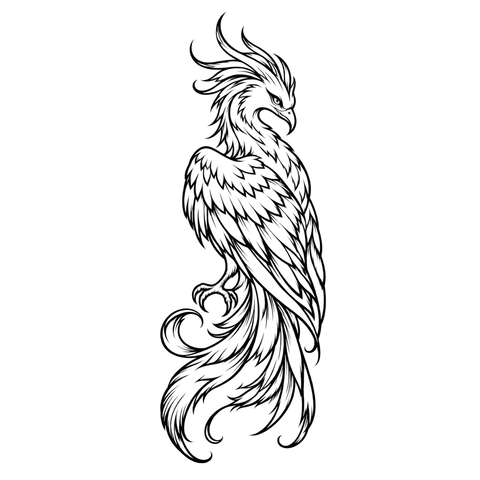
Resting phoenix
The folded wings give this phoenix a more upright, resting posture. The turned head and layered tail carry the movement instead of a broad wingspan. Leave room beside the face and compare the total height before reducing it. Choose a photo facing the intended area, then compare the design from a normal viewing distance. Use Try on to make a personal preview; your tattoo artist should confirm the final line spacing and physical dimensions.
AI-generated design reference · not a finished stencil
Try on →Forearm
Classic composite · adult AI model · not a real tattoo
Try this placement →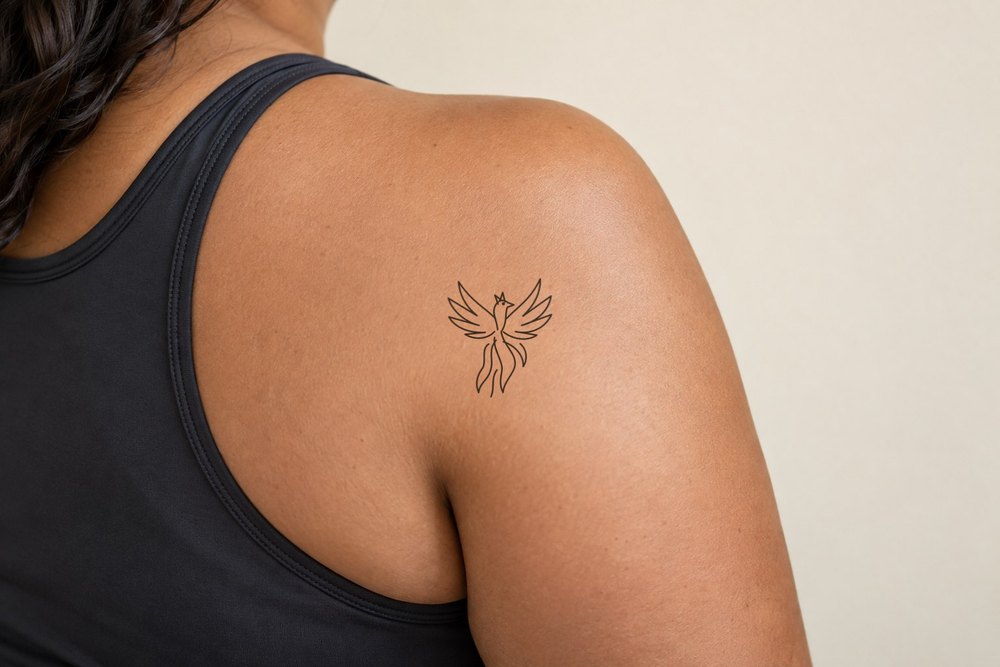
Shoulder
Classic composite · adult AI model · not a real tattoo
Try this placement →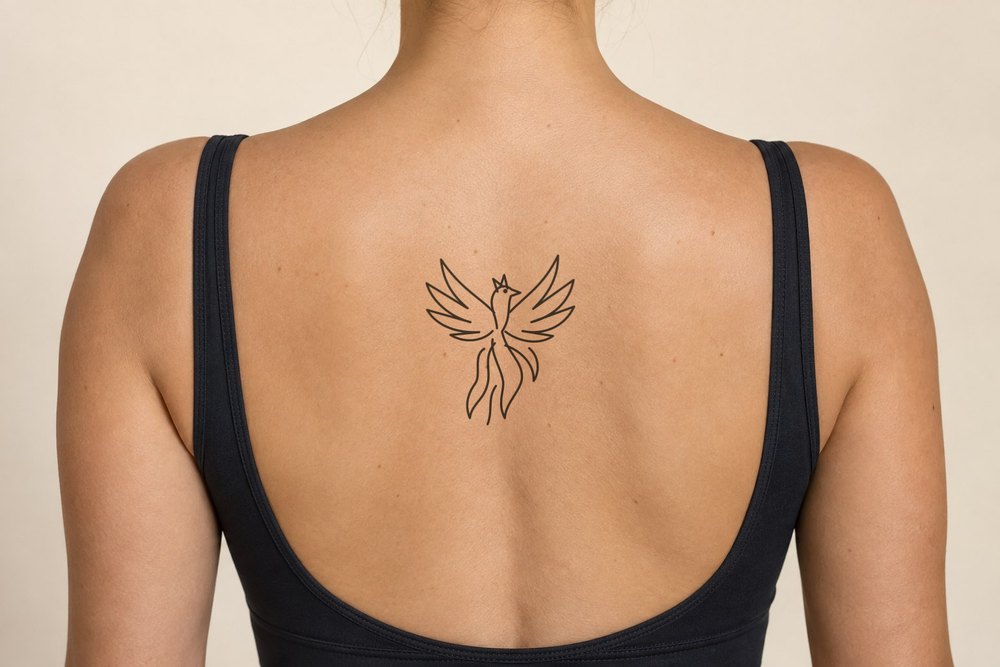
Back
Classic composite · adult AI model · not a real tattoo
Try this placement →Try it on your skin
Preview a design on your photo without leaving this page. Choose an adult body preset or upload a photo, then adjust position, size, and angle. Classic is free and requires no sign-in; photo processing stays in your browser. Download a reference before replacing your current draft.
This is a flat visual comparison, not a prediction of healed ink, skin movement, or physical dimensions. Bring the original drawing and preview to your tattoo artist.
Try on your photo →Prefer a full workspace? Open the tattoo simulator.
Phoenix Tattoo FAQ
What does a phoenix tattoo mean for a woman?
It may be her personal image of renewal, persistence, or a new direction, or simply a fantasy bird she enjoys. Gender does not add a fixed interpretation. Do not assume a specific difficult experience from the tattoo or expect the wearer to explain private events.
Can a man have a phoenix tattoo?
Yes. The motif is not restricted by gender. Choose the wing shape, line weight, and placement that fit your taste. A broad black silhouette is one option, but a smaller or more delicate design can carry just as deliberate a personal meaning.
What can a phoenix tattoo mean in a mental health context?
A person may use it to mark hope, rebuilding, or a continuing journey. It does not prove that a difficult period is over, and the image cannot reveal a diagnosis. Use the story on your own terms without treating a tattoo as a treatment or obligation.
Does a phoenix tattoo symbolize strength?
It can, if that is the meaning you choose. Strength might mean persistence, asking for help, or changing direction rather than being invulnerable. A design brief that names your intention gives the artist something more specific to work with than a generic promise of power.