SYMBOLS & STORIES · TatTryOn editorial
Matching Tattoos for Couples
Matching tattoos for couples can use the same symbol, complementary drawings, or two parts of a shared idea. Choose a design each person would enjoy independently, compare it on separate photos, and discuss visibility and future changes before making a permanent decision.
Help me make this meaning personal →
Three ways to make a pair without copying everything
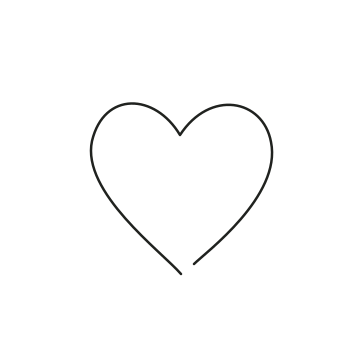
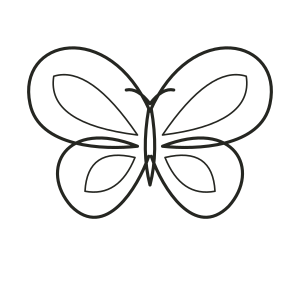
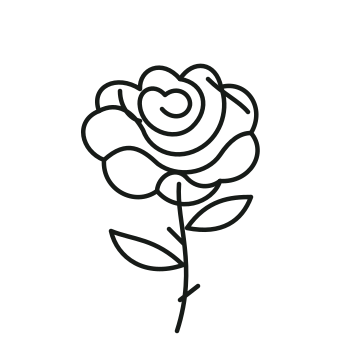
Identical motifs are the most direct approach: each person chooses the same drawing, perhaps at a different size or on a different body area. The connection stays recognizable without requiring the tattoos to line up physically. A small heart, a butterfly, or a rose can work as a shared starting point, but both people should enjoy the image rather than accepting it only to please the other.
Complementary designs share a relationship without being identical. You might choose two related flowers or shapes with a common outline. A split design gives each person only part of a larger image; it can be appealing when the parts meet, but check how each half looks on its own. Ordinary life will not keep two arms aligned, so the separate compositions deserve just as much attention as the combined photograph.
Which symbols fit your relationship?
Start with something you both recognize in your own story: a shared interest, a place, a visual shape, or a quality you appreciate in each other. A butterfly can be a personal image of change; a rose can connect with affection or a remembered occasion. Those are possibilities, not evidence that a specific flower guarantees commitment or that identical tattoos make a relationship stronger.
Compare the butterfly and rose meaning guides if those motifs interest you. A simple open heart is another design available in the preview below. Do not add unfamiliar sacred imagery merely because it looks romantic in an inspiration picture. If your relationship includes different cultural or religious backgrounds, discuss the reference openly rather than assuming both people attach the same meaning to it.
Color and small variations can keep the pair personal
You do not have to make every visual detail identical. One person might prefer an open outline while the other wants an artist to develop a bolder version. A shared curve, number of petals, or recognizable shape can provide continuity while leaving room for individual taste. Ask the artist to show which features are essential to the connection and which can change without losing it.
For a color idea, explain whether the palette has a private association or is simply a preference. Do not assume that the same color will look identical in different lighting or on different skin. The sample designs here are monochrome, and the simulator does not change their color or line weight. Use it to compare placement; bring separate artwork if the two final designs will differ.
Browse style references: Fine line tattoo designs · Minimalist tattoo designs · Blackwork tattoo designs · Geometric tattoo designs · Watercolor tattoo designs. These galleries include other subjects and do not change a symbol’s meaning.
Small and simple: compare size on each person
A small matching design should be understandable on its own. If your idea depends on several tiny objects, letters, and dates, ask whether all of them are needed. A recognizable outline can be easier to discuss than a crowded miniature scene. The goal is not to make the tattoos as small as possible, but to find a composition both people would be comfortable wearing.
Choose each person’s size separately. A percentage of one photograph has no fixed relationship to centimeters on another body. Compare a smaller and a larger version for each person, then ask the artist about real dimensions. Wrist, forearm, hand, and ankle references can help you discuss visibility, but a flat preview cannot confirm a tattoo’s final fit or how detail will change over time.
Placement, work, and everyday visibility
Before deciding on a body area, consider the clothes and routines you each have. A position that is usually covered for one person may remain visible for the other. Work expectations, personal comfort, and the desire for privacy can differ. A shared tattoo does not require the same level of public visibility, and choosing different placements does not reduce the meaning you attach to the pair.
Look at the photo in the posture you normally use rather than only in a carefully posed matching picture. Check what happens when an arm turns or a sleeve moves. These are practical composition questions, not predictions about pain or healing. If either person is uncertain, save the reference and return to the decision later instead of using the other person’s enthusiasm as a deadline.
Compare placement references: wrist tattoo examples · forearm tattoo examples · hand tattoo examples · ankle tattoo examples. See the tattoo placement guide for more ways to compare.
What if the relationship changes or you break up?
Discuss this before the appointment, while neither person is under pressure. A design tied to a shared interest may remain something you enjoy independently; a name or half-image might feel different later. There is no symbol that removes that uncertainty. Ask each other whether you would still choose the drawing if the relationship changed, and accept that the answers may not match.
A breakup does not automatically require removing or changing a tattoo. Someone may keep it as part of their history, ask an artist about redesign possibilities, or explore professional removal advice. None of those options should be promised as easy, inexpensive, or complete. A digital preview cannot prove that a future cover-up will work. Choose with the permanent nature of the decision in mind, not with a guaranteed escape plan.
How to try the designs together and compare
Open one of the design buttons below to preview it without leaving this page. Person A can upload a photo, adjust the drawing, and download a reference. Save that result before Person B uses another photo. Alternatively, each person can use their own device and compare the two downloaded images. The current local draft is a working space, not a gallery that automatically preserves every alternative.
Compare the pair at ordinary viewing size, then inspect each image separately. Ask whether the connection is still clear when the tattoos are not side by side. Try a second placement if one person is compromising on visibility or composition. Bring both original drawings and both photo references to the artist, with a note describing the feature that should stay consistent across the pair.
Read the butterfly meaning guide and rose meaning guide, then compare these three real design studies.
Try it on your skin
Preview a design on your photo without leaving this page. Choose an adult body preset or upload a photo, then adjust position, size, and angle. Classic is free and requires no sign-in; photo processing stays in your browser. Download a reference before replacing your current draft.
This is a flat visual comparison, not a prediction of healed ink, skin movement, or physical dimensions. Bring the original drawing and preview to your tattoo artist.
Try on your photo →Prefer a full workspace? Open the tattoo simulator.
Couples Tattoo FAQ
What is a good matching tattoo for couples?
A good candidate is a design both people enjoy independently and can explain in their own words. Shared motifs such as a heart, butterfly, or rose are starting points, not requirements. Compare size and placement separately, and leave room for either person to decline.
What does it mean when a couple gets matching tattoos?
It may mark a shared experience, affection, or a decision to express connection visually. It does not prove relationship stability. Discuss permanence, visibility, and the possibility of change before committing, especially if the design would feel incomplete or unwanted on its own.
What is the 1/3 rule in tattoo design?
The phrase is not a single standardized tattoo rule. In some tattoo-artist discussions it means balancing roughly one-third dark ink, one-third color or midtone, and one-third open skin; other sources use it differently. Ask your artist which meaning they intend. It is not a rule for couples, a size prescription, or a guarantee of results.
Can matching tattoos be small, simple, and meaningful?
Yes. One shared shape or a carefully chosen detail can carry a personal connection without a complicated scene. The minimum workable size depends on the drawing and placement. Use the photo preview to compare options, then let the artist adapt the physical design.
Do we have to get the same tattoo in the same place?
No. You can share a motif while choosing different positions, sizes, or artist-developed variations. Each person’s preferences and everyday visibility matter. Compare the two references independently before judging how well they look together.
Source context: TattooArtists discussion: one-third rule and open skin (practitioner discussion, not a formal standard). This is a discussion of one usage, not a universal rule.