SYMBOLS & STORIES · TatTryOn editorial
Tattoo Meanings & AI Tattoo Ideas
Find a tattoo that means something to you
Tell us your story. Compare three ideas, create your favorite, and try it on your photo.
Text suggestions use Qwen3.8-Flash through APIMart. This advisor does not browse live sources; check recent or official facts independently.
More themes
No credits needed for ideas. Guests have one consultation per day; signed-in free users have three. Customers with a purchase that has not been fully refunded have no site daily consultation count. Signed-in adults can revise each completed consultation once. Image generation uses the shared free allowance or 1 credit; Classic try-on is free.
For adults 18+. Ideas are visual starting points, not finished stencils or guarantees of healed results. Your story is sent to a third-party AI service; do not include sensitive personal information. Consultation results expire after 24 hours. Your Classic body photos stay on your device. Privacy details.
Tattoo symbol meaning comes from the image, its cultural context, and the person who chooses it. Use this guide to compare six symbols, read their individual stories, and try a design on your photo before deciding on a placement.
Tattoo meanings and symbolism: start with a symbol
The six guides below cover butterfly, lotus flower, snake, phoenix, rose, and dragon designs. Each row gives a short possible interpretation and a route to a more detailed article. These descriptions are starting points for a conversation, not a code that reveals a stranger’s personality, beliefs, relationship status, or life history. Read the full guide if a particular cultural reference matters to you.
Choose by the shape you enjoy as well as by the idea you want to express. Someone looking for change could prefer the openness of butterfly wings, the structure of a lotus, or the movement of a snake. Those motifs need not tell the same story simply because a short summary uses a similar word. The drawing, supporting details, and reason for choosing it make the difference.
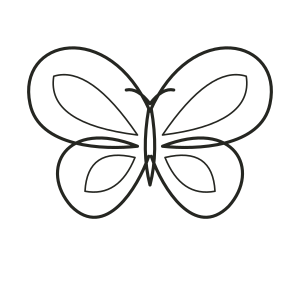
Butterfly tattoo meaning
A personal reminder of change, freedom, or a new chapter.
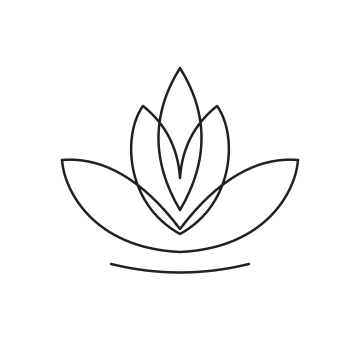
Lotus Flower tattoo meaning
Growth and clarity, with distinct sacred contexts in Buddhist and Hindu art.
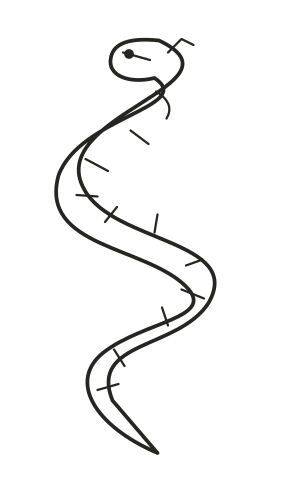
Snake tattoo meaning
Renewal, vigilance, or a boundary, depending on the reference.
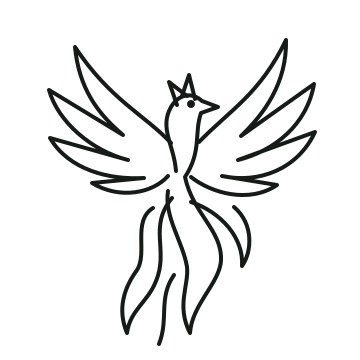
Phoenix tattoo meaning
Rebuilding or persistence; named bird traditions need separate research.
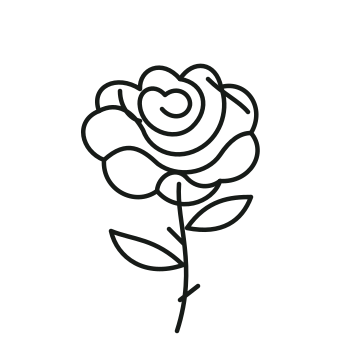
Rose tattoo meaning
Affection, remembrance, or a personal connection to the flower.
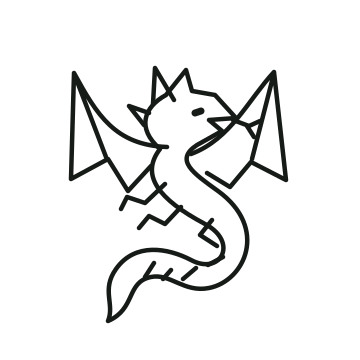
Dragon tattoo meaning
Strength, guardianship, or imagination within a specific context.
Why the same symbol means different things to different people
A tattoo can have several layers of meaning at once. The wearer may connect it with a private memory, an artist may emphasize a particular visual tradition, and a viewer may recognize a different association. None of those perspectives automatically explains the whole image. Ask what the design means to its owner rather than treating an internet list as a definitive translation.
Context can also change over time. A flower chosen for its appearance may later remind its owner of the period when they got it. A shared design may remain personally meaningful even when a relationship changes. You do not need to predict every future interpretation before choosing a tattoo, but it is worth selecting a form you can appreciate independently of a single explanation.
Read cultural references at the right level
A museum description normally explains an object or tradition within a particular setting. For example, The Met’s record for a seventeenth-century Chinese jade butterfly connects that object’s motif with joy, weddings, and longevity. That source is useful evidence for its context. It does not establish that every butterfly tattoo anywhere in the world communicates all three associations.
The same care applies to religious flowers, serpents, and mythic creatures. Identify the actual reference before combining it with unfamiliar lettering or decorative symbols. Our individual guides distinguish documented examples from personal design suggestions and link to their sources. An original botanical or fantasy drawing can be a clearer starting point if you do not intend to reference a specific tradition.
Context sources: The Met: Butterfly, Chinese jade. These describe particular sources and contexts, not universal tattoo meanings.
How to choose a symbol that fits your own story
Write one ordinary sentence about what you want to remember: a quality, an event, a person, or simply an interest in nature. Then choose two motifs whose shapes appeal to you. Compare how each might express that sentence without adding words. If you find yourself inventing an elaborate explanation for a drawing you do not really enjoy, reconsider the drawing before adding more symbolism.
Next, identify one visual feature you would want to preserve. It might be the open space between lotus petals, the arc of a snake, or the stem of a rose. This gives your artist something concrete to work with. You can keep personal details private while still explaining the movement, balance, and level of detail you want from the finished reference.
Color and variation: a palette is not a personality test
Color can make a design feel different to its wearer, but a palette rarely provides a universal dictionary. A black rose could mark remembrance or simply suit a collection of monochrome tattoos. A blue butterfly could recall a particular species or a favorite color. Treat those as possible individual choices unless you have a source for a more specific cultural reading.
If two versions of a motif interest you, compare their outlines before deciding on decorative additions. A colored illustration and a black silhouette may distribute visual emphasis differently even when they depict the same subject. The previews here use existing monochrome design studies. They help with placement and proportion; they do not recolor artwork or predict the appearance of healed pigment.
Match the composition to a body area and style
A wide shape such as open butterfly wings asks a different placement question from a long rose stem. Start with the visible space around the design, and compare more than one orientation. Wrist, forearm, hand, and ankle galleries offer examples of different surrounding landmarks. Your own photograph is useful when deciding how often you want to see the image and how it relates to your clothing.
Fine line, minimalist, blackwork, geometric, and watercolor galleries can help you describe the visual approach you prefer. They do not change a symbol into a fixed meaning. Keep the subject and style decisions separate long enough to understand each one. A complex idea does not require a complex drawing, and a simple design can still carry a carefully considered personal intention.
Compare placement references: wrist tattoo examples · forearm tattoo examples · hand tattoo examples · ankle tattoo examples. See the tattoo placement guide for more ways to compare.
Browse style references: Fine line tattoo designs · Minimalist tattoo designs · Blackwork tattoo designs · Geometric tattoo designs · Watercolor tattoo designs. These galleries include other subjects and do not change a symbol’s meaning.
From a short list to a useful artist reference
Open one of the six symbols in the photo preview, choose a body model or upload your photo, and compare two placements. Change one variable at a time: first the angle, then the size, then the position. Download the alternatives you want to discuss before replacing the current local draft. The preview has no physical ruler, so screen dimensions are not measurements on your body.
Bring the original artwork alongside the placement image and a short note about the parts that matter to you. Your artist can redraw the design, check actual dimensions, and prepare a stencil. A flat overlay cannot show hidden surfaces, skin movement, or healed ink. If you are considering a shared design, use the couples guide to compare two independent references instead of assuming one layout fits both people.
Try it on your skin
Preview a design on your photo without leaving this page. Choose an adult body preset or upload a photo, then adjust position, size, and angle. Classic is free and requires no sign-in; photo processing stays in your browser. Download a reference before replacing your current draft.
This is a flat visual comparison, not a prediction of healed ink, skin movement, or physical dimensions. Bring the original drawing and preview to your tattoo artist.
Try on your photo →Prefer a full workspace? Open the tattoo simulator.
Tattoo Symbol FAQ
Does every tattoo symbol have one meaning?
No. A cultural reference, a personal memory, and the drawing itself can contribute different layers. A short symbol definition is a research starting point. The wearer’s explanation is more reliable than assumptions based on the motif alone.
Can I choose a tattoo just because I like the design?
Yes. Enjoying the image is a valid reason. You can still research unfamiliar religious or cultural elements before using them. A simple aesthetic preference does not need to be dressed up as an invented spiritual history.
How do I compare two symbols before choosing?
Read both individual guides, identify the shape you want to preserve, then preview each design on a photo. Save separate versions with similar placement and size so you are comparing the motif rather than unrelated layouts.
Will the preview show exactly how the tattoo will look?
No. Classic produces a flat photo composite for comparing position, angle, and proportion. Your artist must adapt the drawing and confirm its physical size. It does not predict healed ink, skin movement, or the aging of fine detail.
How does the AI tattoo idea advisor work?
Describe what your tattoo should represent, or start with a theme. Compare three personal design directions, choose one, then continue to the image generator with the instructions already prepared. After generation, open the design in the free Classic photo editor.
Do tattoo consultations use image-generation credits?
Consultations do not spend image-generation credits. Guests can start one consultation per day and signed-in free users can start three. Customers with a completed purchase that has not been fully refunded have no site daily consultation count. Signed-in users can revise each completed consultation once. Creating an image uses the available shared free allowance or one credit, as shown in the generator.
Can AI confirm the latest celebrity symbols or universal tattoo meanings?
No. Current releases and official symbols need a reliable source. Personal meanings are interpretations, and cultural meanings depend on a specific tradition or reference. Check uncertain details before choosing a permanent design.